
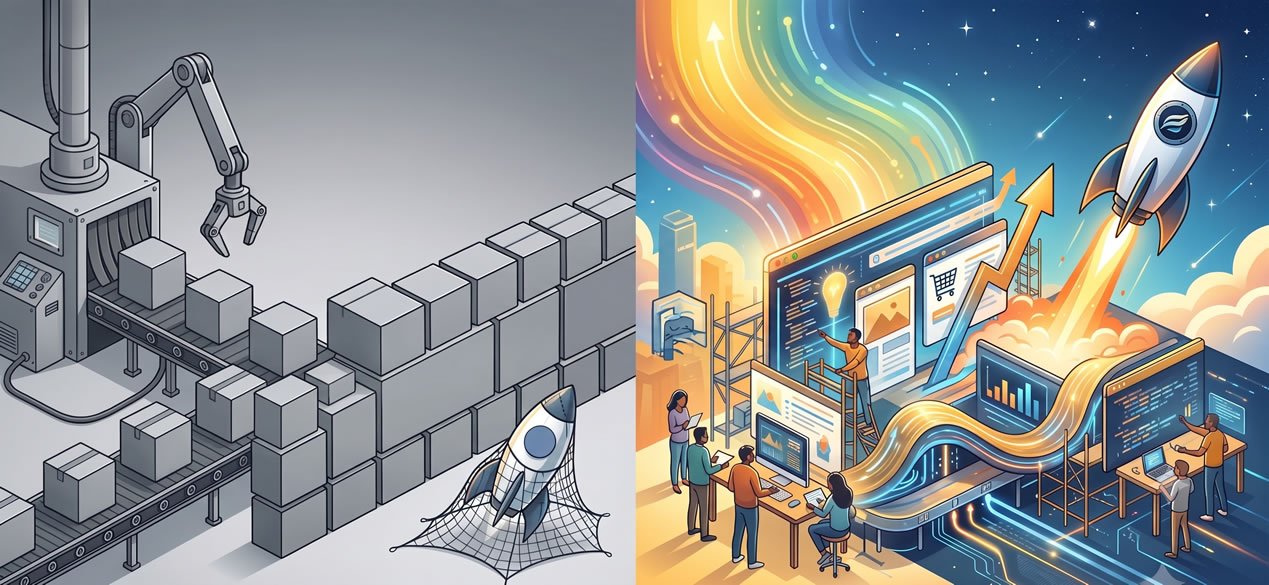
When launching a new venture, the math seems simple. Why pay a developer thousands of dollars when you can buy a beautiful, pre-made template on ThemeForest for $60? When looking at Custom WordPress vs Premium Themes, the upfront cost makes templates look like the obvious winner.
But as your business scales, that $60 theme transforms into a financial black hole.
I transition 7-figure e-commerce brands and B2B services off of generic templates onto custom architecture every month. The breaking point is always the same: the theme that helped them launch is now actively preventing them from growing. Here is why scaling brands must eventually escape the template trap.
The Illusion of the $60 Theme
Premium off-the-shelf themes are built to be mass-market products. The developers who code them have to include hundreds of different layouts, color pickers, and integrations so that a bakery in Ohio and a law firm in London can use the exact same file. This mass-market approach causes catastrophic backend issues.
1. Feature Bloat
You might only want a simple contact page, but the premium theme loads the code for portfolio sliders, WooCommerce product grids, and parallax animations in the background. This bloat slows down the WordPress admin dashboard to a crawl, making simple content updates agonizing for your marketing team.
2. The Plugin House of Cards
Because templates try to do everything, they rely on a fragile ecosystem of bundled third-party plugins. If one plugin updates and conflicts with another, your entire site crashes. You are no longer running a business; you are managing a precarious software tower.
3. Database Clutter
Premium themes dump thousands of useless configuration rows into your WordPress database. Over a few years, this “junk data” creates extreme backend latency, making order processing and lead routing incredibly slow.
Actionable Example: The Maintenance Reality
The Premium Theme: Your marketing team wants to add a custom field for “Webinar Dates” to your blog. Because the theme is rigid, you have to hire a freelancer to write messy override code in a child theme, which breaks during the next core update.
The Custom Build: A custom architecture maps exactly to your business. The developer adds a specific “Webinar Date” field to your admin panel natively. Your team types in the date, hits publish, and the design updates flawlessly.
When to Upgrade: Custom WordPress vs Premium Themes
So, when is the exact moment you should stop treating your website as an expense and start treating it as custom software?
- When security is paramount: Custom themes have a dramatically smaller attack surface because they don’t rely on dozens of generic, widely targeted plugins.
- When your workflow is unique: If you find yourself forcing your business processes to fit the limitations of your website, you have outgrown your template.
- When load time impacts revenue: If you are driving paid ad traffic to a sluggish template, you are burning ad spend. A custom theme converts at a significantly higher rate due to instant load times.
Frequently Asked Questions
Aren’t custom WordPress themes difficult to manage?
The exact opposite is true. A premium custom theme is built specifically for your team’s workflow using Advanced Custom Fields (ACF). You only see the options you actually need, making the backend infinitely cleaner and easier to manage than a generic theme.
Is the ROI of a custom theme worth the upfront cost?
Yes. When factoring in the elimination of paid premium plugins, reduced developer maintenance hours, and the increase in organic conversions due to faster load times, custom architecture consistently pays for itself within the first year.
Key Takeaways
- Mass-market means bloated: Templates are built for everyone, which means they are optimized for no one.
- Fragility scales poorly: Relying on bundled template plugins creates a massive security and maintenance risk.
- Custom code is a financial asset: Hand-built architecture streamlines your team’s workflow and secures higher conversion rates.
Conclusion
There is absolutely no shame in launching your first business on a premium template. It is a smart, lean business move. But what gets you to your first $100k will not get you to your next $1M.
When your brand reaches the point where scale, security, and flawless performance are non-negotiable, the Custom WordPress vs Premium Themes debate ends. It is time to drop the templates and build a digital infrastructure that actually matches the caliber of your business.